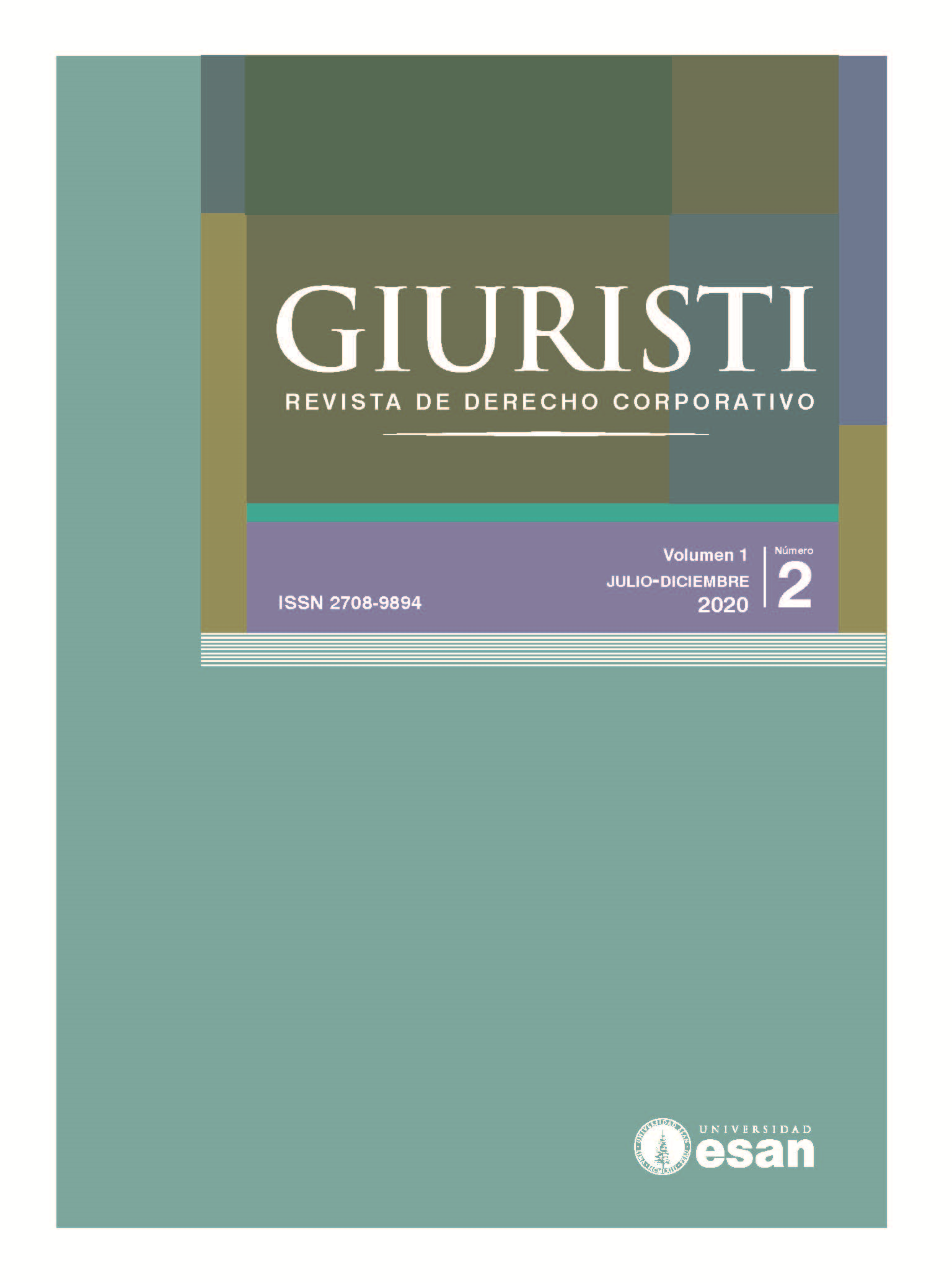
Good governance of public finance and economic development
DOI:
https://doi.org/10.46631/Giuristi.2020.v1n2.05Keywords:
Good governance, public finances, budget balanceAbstract
The concept of good governance of public finances emerged in the 1990s within the discourse of international organizations to promote issues well known today, such as the performance of public spending, the transparency of the public budget, etc. After the 2008 crisis, this concept has evolved towards the obligation to respect the budget balance. In any case, the national reception of the international prescriptions in the matter of good governance of public finances must be verified, thus showing the difficulties involved in wanting to apply the same legal rules everywhere. The example of the varied reception of the golden rule of public finances by the laws of European states confirms this.
Downloads
References
The World Bank. Sub-Saharan Africa : From crisis to sustainable growth, a long-term perspective study. Washington DC : The World Bank,1989.
Fonds Monétaire International (FMI). Code de bonnes pratiques en matière de transparence des finances publiques. FMI, 1998 (actualizado en el 2007).
Transparence budgétaire : Les meilleures pratiques de l’OCDE. Revue de l’OCDE sur la gestion budgétaire 1, n.° 3 (2001/2002).
Downloads
Published
How to Cite
Issue
Section
License
Copyright (c) 2020 Manuel Tirard

This work is licensed under a Creative Commons Attribution 4.0 International License.
All content in the electronic journal is distributed under a license for use and distributionCreative Commons Attribution 4.0 International (CC BY 4.0). By which:
You are free to:
- Share — copy and redistribute the material in any medium or format for any purpose, even commercially.
- Fit — to remix, transform, and build upon the material for any purpose, including commercially.
The licensor cannot revoke these freedoms as long as you follow the terms of the license.
Under the following terms:
- Attribution— You must give credit appropriately, provide a link to the license, and Please indicate if any changes have been made You may do so in any reasonable manner, but not in any way that suggests the licensor endorses you or your use.
- There are no additional restrictions.— You cannot apply legal terms nor technological measures that legally restrict others from making any use permitted by the license.
Copyright
The authors retain their copyright. Therefore:
- The authors retain their intellectual property rights: copyright, trademarks and patents, as well as any process or procedure described in the article.
- The authors retain the right to share, copy, distribute, perform and publicly communicate the article published inGiuristi: Revista de Derecho Corporativo (Giuristi: Journal of Corporate Law) (for example, placing it in an institutional repository or publishing it in a book), with acknowledgment of its initial publication inGiuristi: Revista de Derecho Corporativo (Giuristi: Journal of Corporate Law) .
- The authors retain the right to republish their work, to use the article or any part thereof (for example: a compilation of their works, lecture notes, a thesis, or a book), provided they acknowledge its initial publication in theGiuristi: Revista de Derecho Corporativo (Giuristi: Journal of Corporate Law) (authors of the study, name of the journal, volume, number and date).